






Author: Jun

February 9, 2026

Oracle EPM Planning is a mature and highly capable platform. However, in real-world implementations, challenges around performance, usability, and long-term maintainability rarely stem from missing functionality. More often, they can be traced back to design and build decisions made early in the project lifecycle. This post focuses on practical, field-tested guidance for designing and building…
February 6, 2026

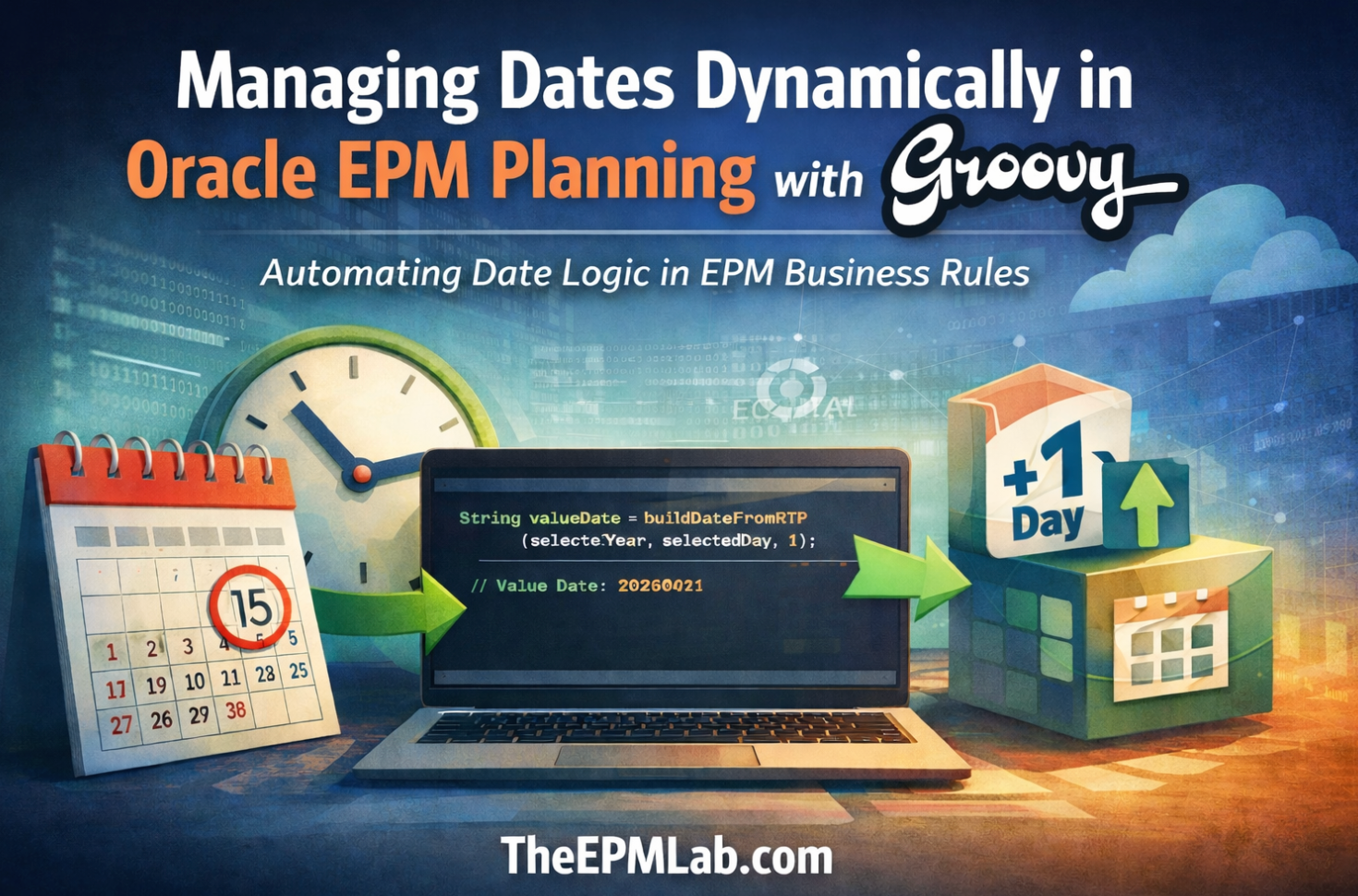
Introduction Date management is a common but often underestimated requirement in EPM Planning applications. Whether it’s driving new dates, controlling forecast cutoffs, or dynamically setting substitution variables, finance users expect the system to “just know” the right date—based on form inputs, system time, or business logic. With the introduction of Groovy in Planning business rules,…

January 30, 2026

Introduction Oracle has been steadily embedding AI and ML capabilities across the Cloud EPM suite. AI narrative reporting is not new. Since it got released, we start to see a very concrete and practical application of generative AI in Narrative Reporting. This post focuses on automated management report narratives, driven directly off report data and…

October 15, 2025

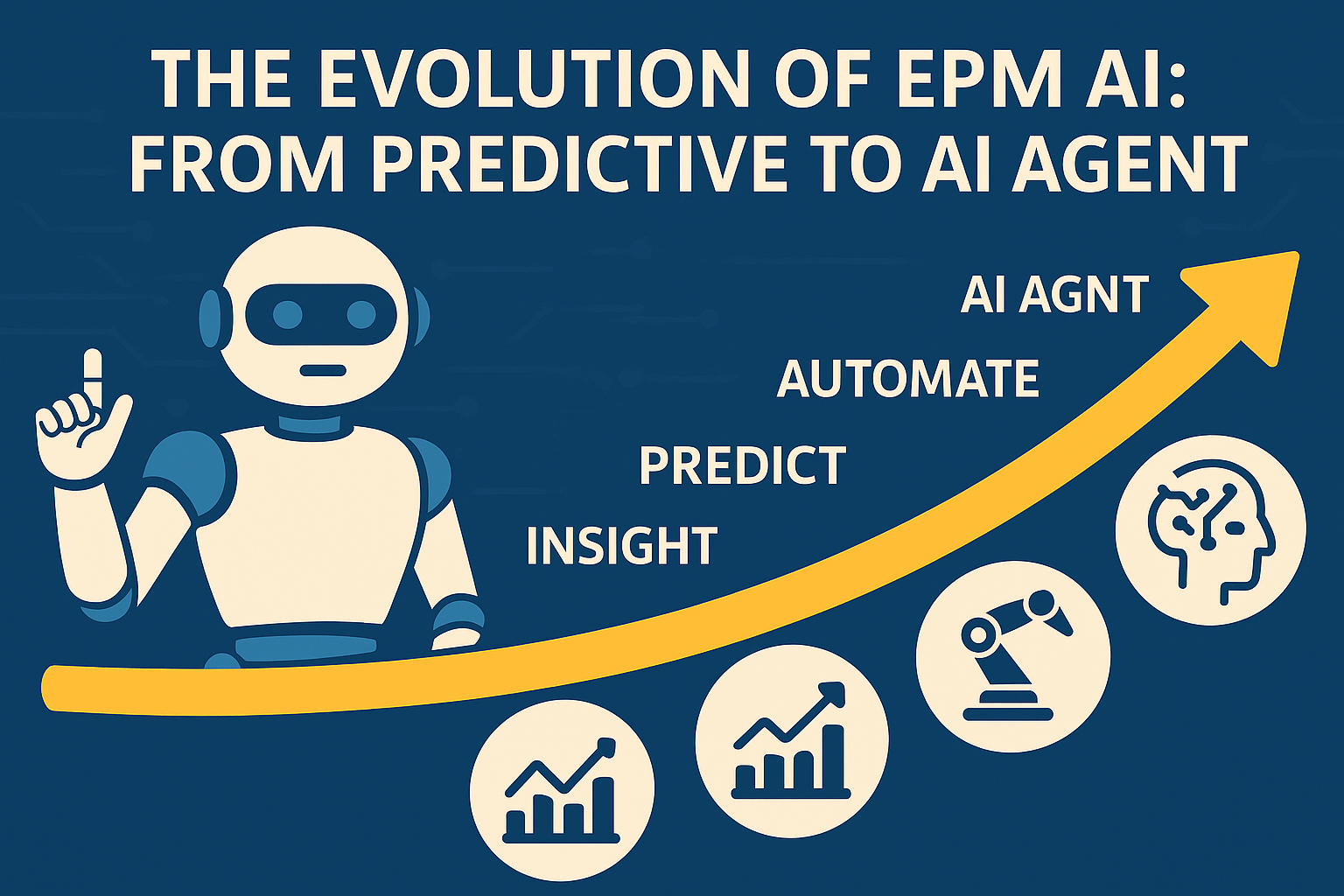
Introduction Over the past decade, Oracle EPM has quietly transformed from a traditional planning and consolidation platform into an intelligent, AI-augmented decision engine. What started with Predictive Planning in 2016 has evolved into a comprehensive AI ecosystem, powered by Intelligent Performance Management (IPM), Generative AI (GenAI) and AI Agents, now seamlessly embedded across the EPM…

October 6, 2025

Introduction Oracle EPM Cloud is updating its Groovy scripting engine to a newer, more secure version in January 2026. This change is not just a background update — it directly affects how Groovy-based business rules and templates run across EPM modules. If your applications rely heavily on Groovy (as most advanced Planning and FreeForm implementations…

September 22, 2025

Part 3 – Roadmap, Limitations, Considerations & Best Practices   🔗 Read the Full Series Part 1 – Configuration and Model Setup Part 2 – Algorithms and Use Cases Part 3 – Roadmap and Best Practices Introduction In the prior parts, we built your foundation and understanding of how Advanced Predictions works and how to…

September 8, 2025

Part 2 – Algorithms, Model Logic & Interpretation, and Real‑World Use Cases   🔗 Read the Full Series Part 1 – Configuration and Model Setup Part 2 – Algorithms and Use Cases Part 3 – Roadmap and Best Practices Introduction In Part 1, you learned how to build the scaffolding of an Advanced Prediction model….

August 25, 2025

Part 1 – Understanding Oracle EPM Advanced Prediction, Configuration, and Model Setup   🔗 Read the Full Series Part 1 – Configuration and Model Setup Part 2 – Algorithms and Use Cases Part 3 – Roadmap and Best Practices Introduction In August 2025, Oracle released Advanced Predictions to EPM Planning and FreeForm. This long-awaited enhancement…

January 22, 2025

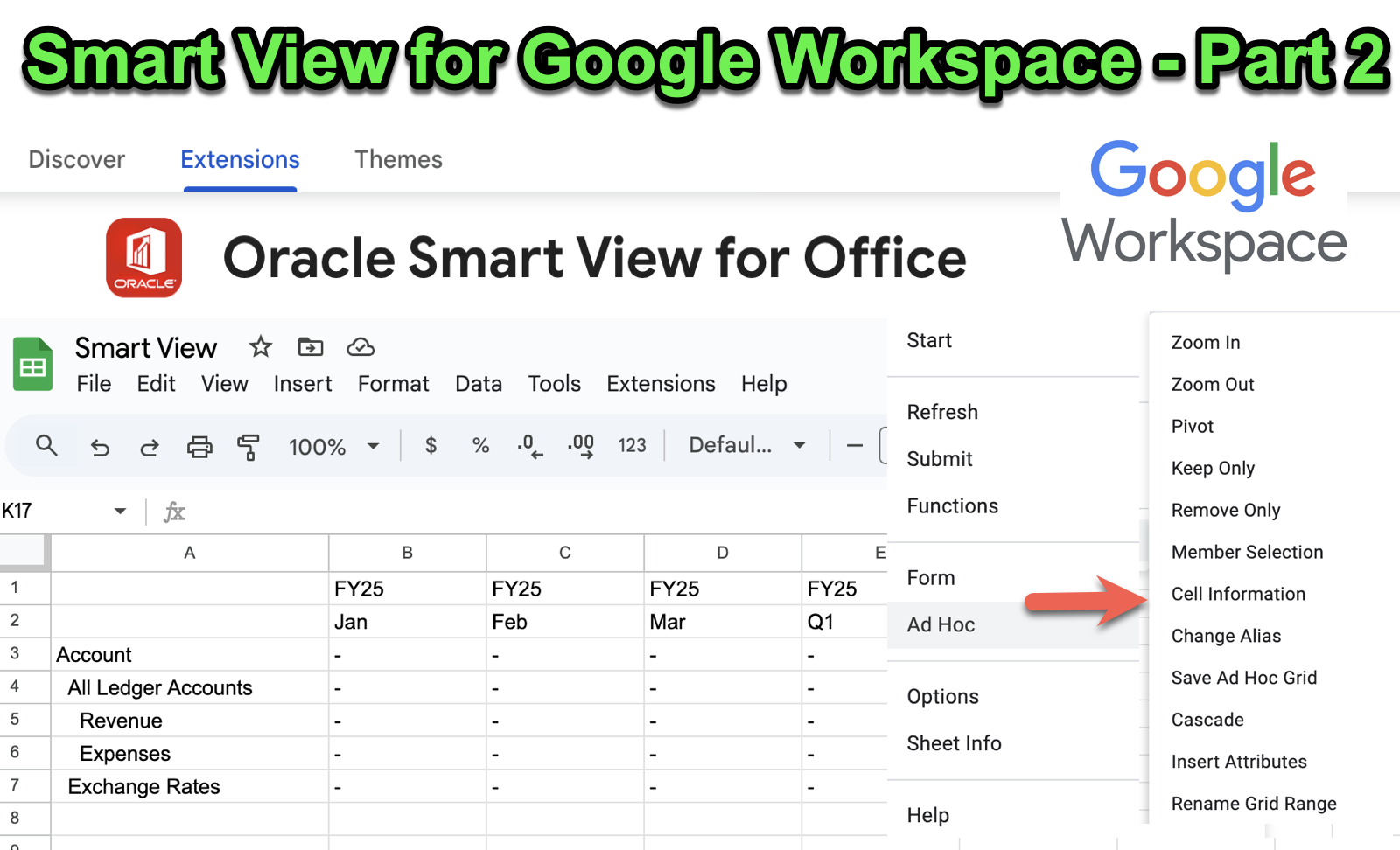
  When Oracle first introduced Smart View for Google Workspace in June 2024, it marked a significant step in integrating Cloud EPM with Google’s suite of productivity tools. Now, as of January 2025, this highly anticipated feature is officially available for download from the Google Workspace Marketplace. In this post, I’ll provide an overview of…

July 1, 2024

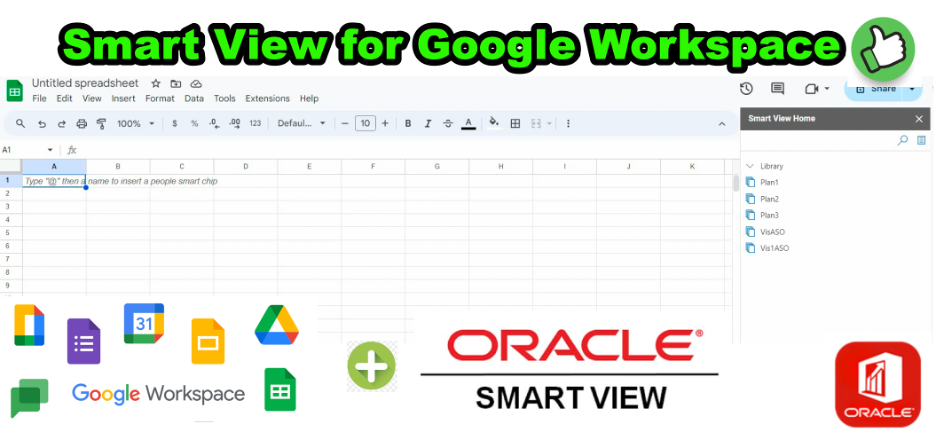
Oracle Smart View is about to support Google Workspace. If you’ve been using Smart View with Office 365 for macOS, you’ll find the Google version has a similar look and feel, with a few differences. Having Smart View available for Google Workspace, particularly Google Sheets, will greatly benefit finance users. With the Google Workspace version…