








Oracle EPM Planning is a mature and highly capable platform. However, in real-world implementations, challenges around performance, usability, and long-term maintainability rarely stem from missing functionality. More often, they can be traced back to design and build decisions made early in the project lifecycle.
This post focuses on practical, field-tested guidance for designing and building Oracle EPM Planning applications that scale efficiently, perform predictably, and remain flexible as business requirements evolve. Experienced practitioners already understand this reality: successful Planning applications are engineered through deliberate design choices—not assembled through configuration alone.
Why Design Best Practices Matter
Design best practices are not about limiting flexibility; they are about protecting it.
Applications that ignore core design principles frequently show the same symptoms:
Common Warning Signs
- Databases 60%+ larger than necessary
- Block explosion at level‑0 and upper levels
- Excessive index and page files
- Slow form save and calculation times
- Rules that are fragile and difficult to enhance
By contrast, well-designed Planning applications consistently deliver:
- Sub‑second average response times
- Predictable calculation behavior
- Simpler enhancements and extensions
- Higher end‑user adoption
- Lower long‑term support and refactoring cost
Design is not a one‑time step. It is an ongoing discipline.
1. Application and Cube Design Foundations
Choose the Right Planning Application Type
Before creating an application, step back and validate the use case. Oracle Planning provides purpose-built modules (Financials, Workforce, Capital) alongside Custom Planning for a reason.
Best practices:
- Use purpose-built modules whenever possible
- Avoid forcing unrelated use cases into a single application
- Separate operational planning from analytics-heavy reporting when scale demands it
Design Tip
If a use case requires heavy aggregation across many sparse dimensions with minimal data entry, consider isolating it in an ASO reporting cube.
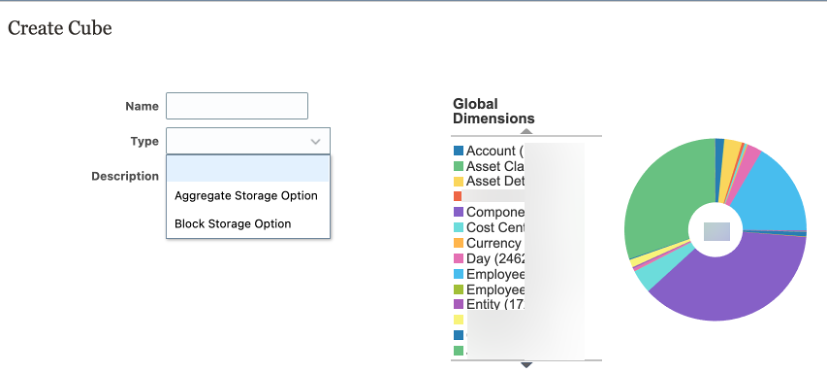
BSO, ASO, and Hybrid Strategy
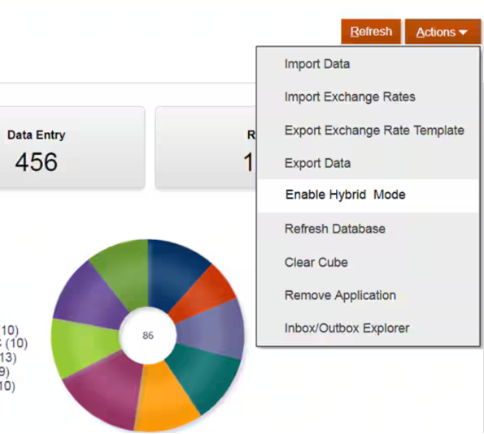
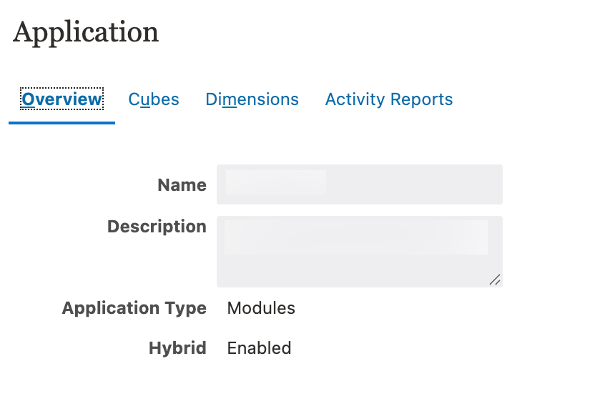
Most Planning applications today rely on Hybrid BSO, but hybrid does not eliminate the need for disciplined design.
Guidelines: – Hybrid BSO for data entry and calculation logic – ASO for reporting, aggregation, and wide dimensional analysis – Avoid calculation logic in ASO except where absolutely necessary
Design Tip
Hybrid improves aggregation speed, but poorly designed dimensions and rules can still degrade performance.
2. Dimension Design: The Highest-Impact Decision
Dimension design has the single largest influence on Planning performance and usability.
Core Dimension Principles
- Avoid long, flat hierarchies
- Limit dynamic calc parents to ~100 children where possible
- Use intermediate rollups intentionally
- Configure storage properties deliberately
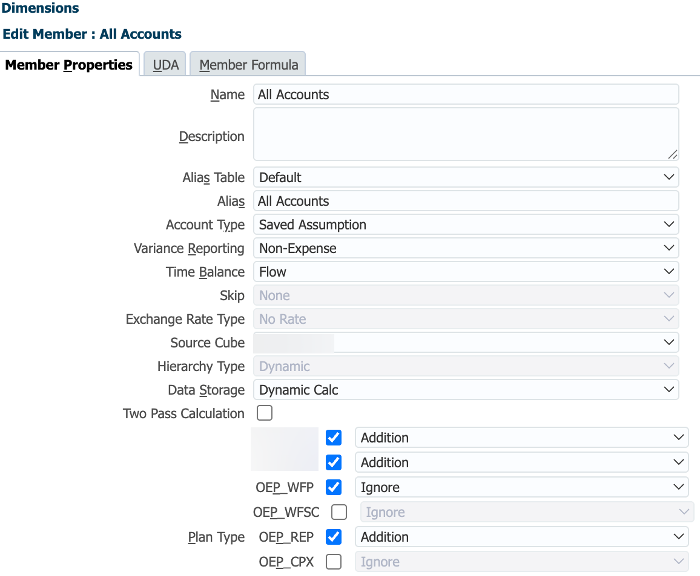
Be intentional with storage properties
- Store only what must be stored
- Use Never Share, Dynamic Calc, and Label Only correctly
- Avoid excessive dynamic calcs at upper levels
Consolidation operators matter
- Don’t default everything to +
- User Never (^) for SmartLists, Data, & Text Not Ignore (~)
Design Tip
Storage defaults are rarely optimal. Review and justify storage for every major hierarchy.
Common Anti‑Patterns to Avoid
Anti‑Patterns
• Making everything stored “just in case”
• Using dynamic calcs to hide weak hierarchy design
• Modeling dimensions purely based on source systems
• Treating metadata as static in a constantly changing business
Good dimension design anticipates change.
3. Calculation Design and Calc Manager Best Practices
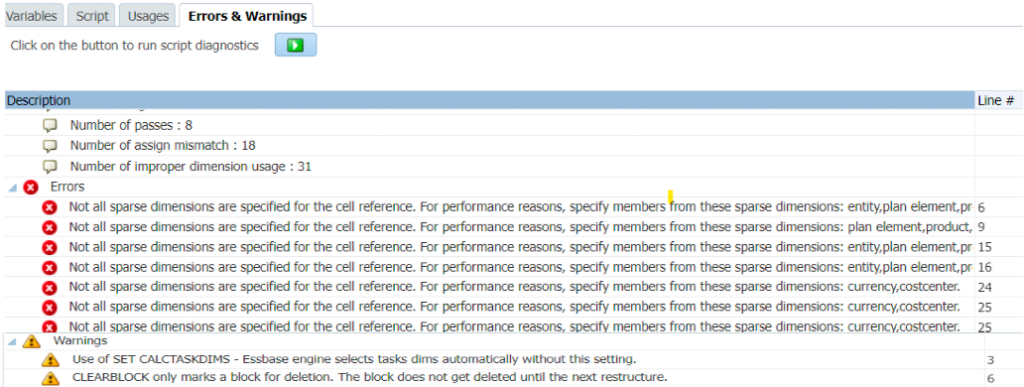
Oracle continues to invest heavily in Calc Manager quality and diagnostics, including Errors & Considerations, which proactively identify inefficient or risky patterns.
Calculation Design Principles
- Scope calculations aggressively
- Always FIX on sparse dimensions
- Avoid implicit block creation
- Minimize database passes
Rule design guidance:
- Combine logic where practical
- Avoid deeply nested FIX statements
- Reduce cross-dimensional references
Design Tip
If a rule feels complex to read, it is often expensive to execute.
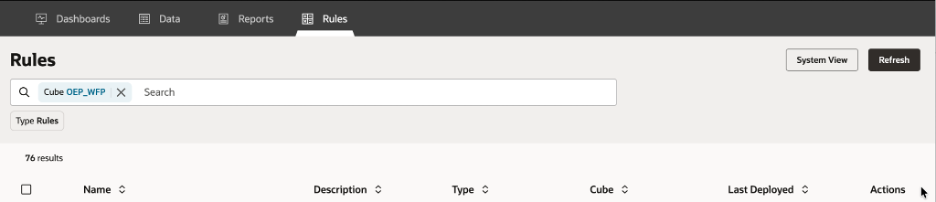
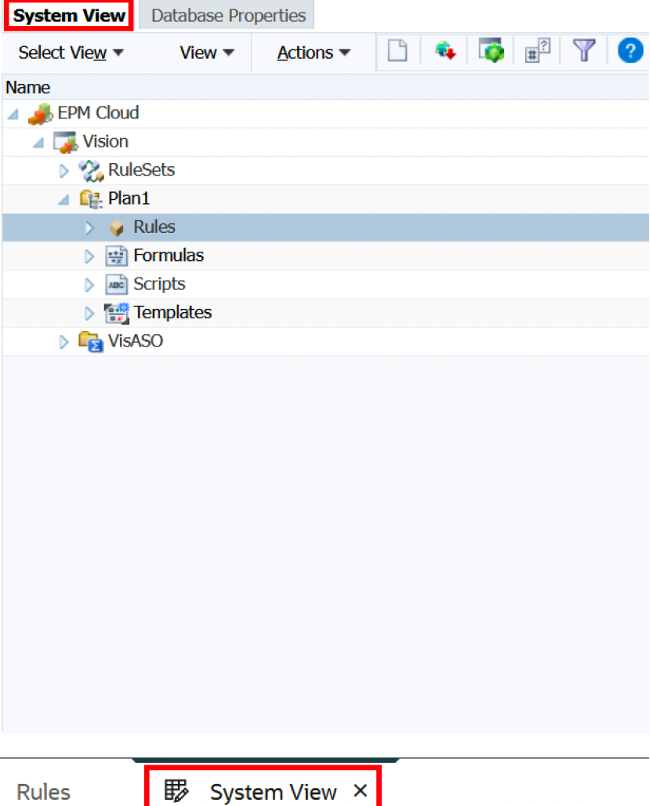
The latest calc manager system view is embedded inside the Rules Cards.
Errors & Considerations Diagnostics
Calc Manager is having a few useful enhancements:
- Missing sparse dimensions in FIX statements
- Create Missing Block Not in FIX with ENDFIX
Rules with errors may still execute, but unresolved issues limit Oracle Support engagement.
4. Forms and User Experience Design
Forms are where users experience Planning and where poor design becomes immediately visible.
Form Design Best Practices
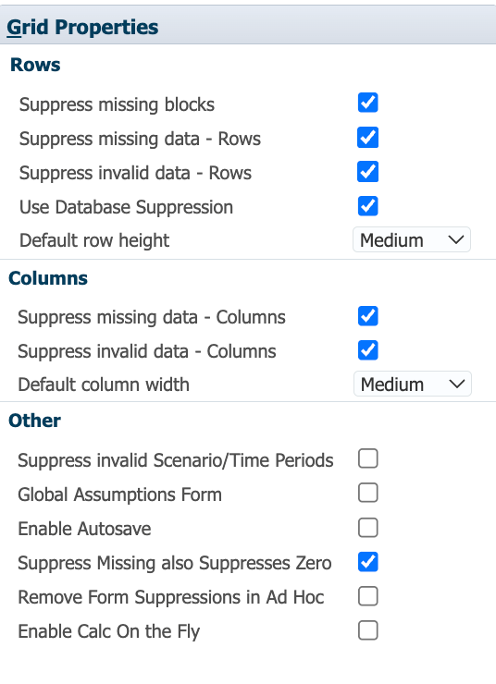
- Use suppression aggressively
- Avoid large dense grids
- Minimize rules executed on save
- Separate data entry from review and analysis
- Design forms by business task, not dimension completeness
Design Tip
A fast form with limited scope often delivers more value than a comprehensive but slow one.
Navigation and Usability
- Organize forms by business process
- Use intuitive folder and artifact naming
- Hide technical complexity from end users
- Guide users through planning cycles with clear navigation
5. Common Planning Use Cases and Design Patterns
Driver‑Based Planning
- Store drivers at the lowest required grain
- Derive downstream values through calculations
- Avoid duplicating driver logic across cubes
Top‑Down and Bottom‑Up Planning
- Use spreads intentionally
- Separate allocation logic from input logic
- Avoid recalculating spreads unnecessarily
Rolling Forecasts
- Design time dimensions for extensibility
- Avoid hardcoding years in rules
- Plan for future forecast periods upfront
6. Application Health and Ongoing Governance
Application health is not optional—it is continuous.
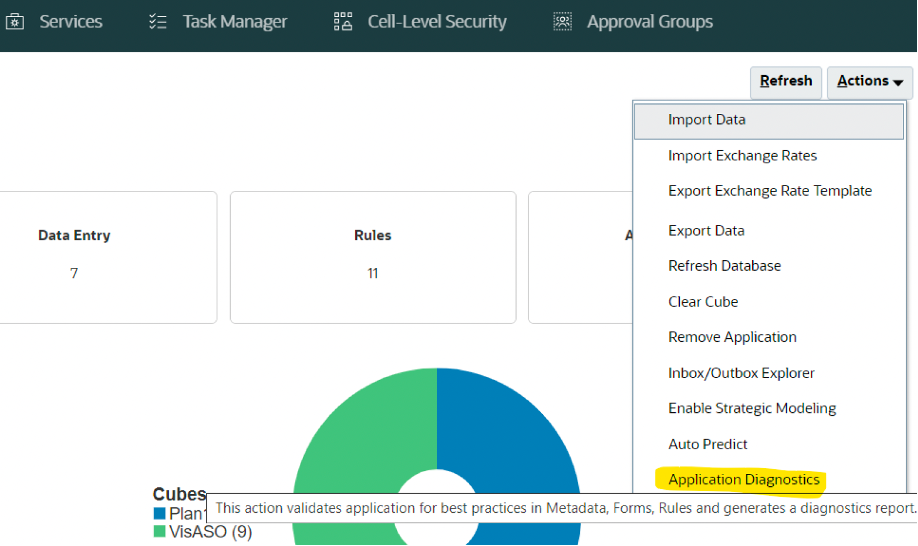
Oracle’s application diagnostics now provide visibility into:
- Dimension properties
- Forms and suppression
- Rule quality
- Storage and consolidation behavior
Recommended cadence:
- Quarterly design reviews
- Monthly review of What’s New features
- Regular Calc Manager diagnostics checks
- Continuous refactoring mindset
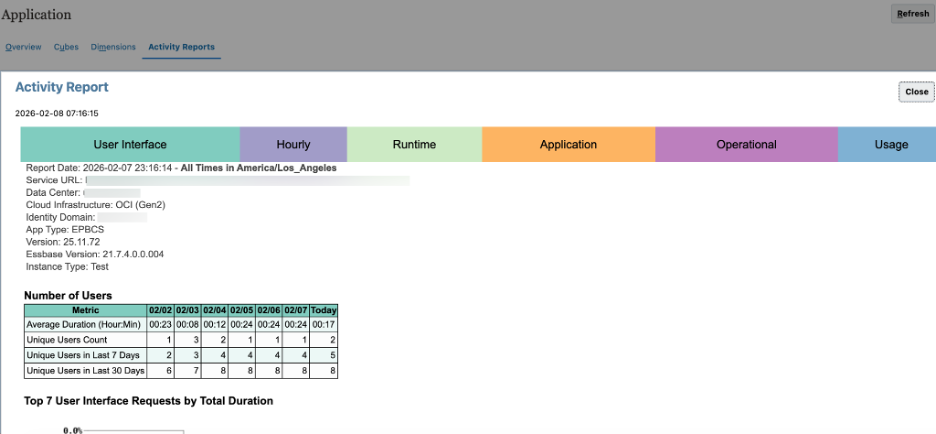
The current Activity Report will be helpful to identify the longest performing Calc Scripts, CPU usage, etc.
Also, the upcoming Application Diagnostics Report will be helpful for proactively reviewing applications.
Final Thoughts
Strong Oracle EPM Planning implementations are built on intentional design, disciplined development, and continuous refinement.
Design best practices are not theoretical. They are distilled from real-world successes and failures at scale. When applied pragmatically, they enable Planning applications that perform predictably, adapt easily, and continue to deliver value long after go‑live.
Invest early in design. Your future self, and your users will thank you.